Around 2,900 searches for “website design Cape Town” happen every month, according to DataForSEO search volume data from August 2026, and behind most of them is the same uncomfortable situation: a business owner who knows their current site is letting them down, facing a market of agencies that all promise the same things in the same words. Choosing a web design company in Cape Town is not about finding the cheapest quote or the flashiest portfolio. It is about finding a team whose process you can inspect before you pay, whose work you can click on today, and whose commercial terms do not trap you. This guide gives you the questions, the red flags and the green flags, in the order you will need them.
Start with what you actually need
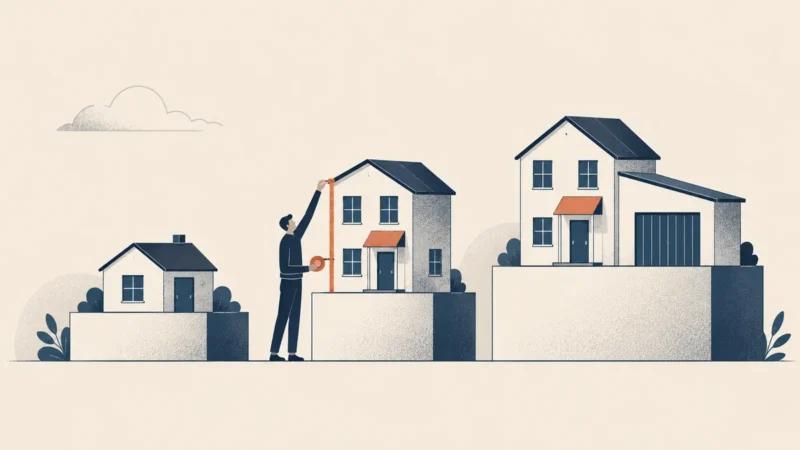
Before speaking to any web design company, decide which of three builds you need: a one-page site for a focused offer, a multi-page site for an established business with several services, or an e-commerce site that sells online. That single decision sets your budget range and filters out half the confusion in quotes.
The three build types serve different jobs:
- One-page website. One strong page that says who you are, what you do and how to reach you. Right for new businesses, single services and campaigns.
- Multi-page website. A homepage plus dedicated pages for services, work, team and contact. Right for businesses with proof to show and more than one thing to sell.
- E-commerce. Products, carts and payments. A different project with its own testing burden and its own timeline; treat quotes for it separately.
If you want numbers against those types before you talk to anyone, our guide to what a website costs in South Africa publishes our full rate card, and the estimator on our homepage builds a starting range from it in about a minute.
The seven questions to ask before you sign anything
Seven questions separate a professional web design company from an expensive disappointment: scope, ownership, process, timeline conditions, measurement, maintenance terms and proof of live work. Ask all seven, in writing if you can, before any deposit is paid.
- What exactly is included in this price? You want a page list, a content plan, tracking and launch checks in writing. “A professional website” is not a scope.
- Who owns the site, the domain and the logins? The only acceptable answer is you, with full access handed over at launch.
- What does your build process look like, step by step? A real process has named stages and checkpoints you can see. If they cannot describe it, they do not have one.
- What starts the clock, and what pauses it? Honest timelines have conditions: deposit paid, brief approved, content in. Beware any promise with no conditions at all.
- How will I know the site is working? Analytics installed before launch, with enquiries and calls tracked. Guessing is not measurement.
- What happens after launch, and what are the terms? Maintenance should be a clear monthly amount with the initial term, the notice period and the CPI adjustment stated in writing, not a contract you need a lawyer to read.
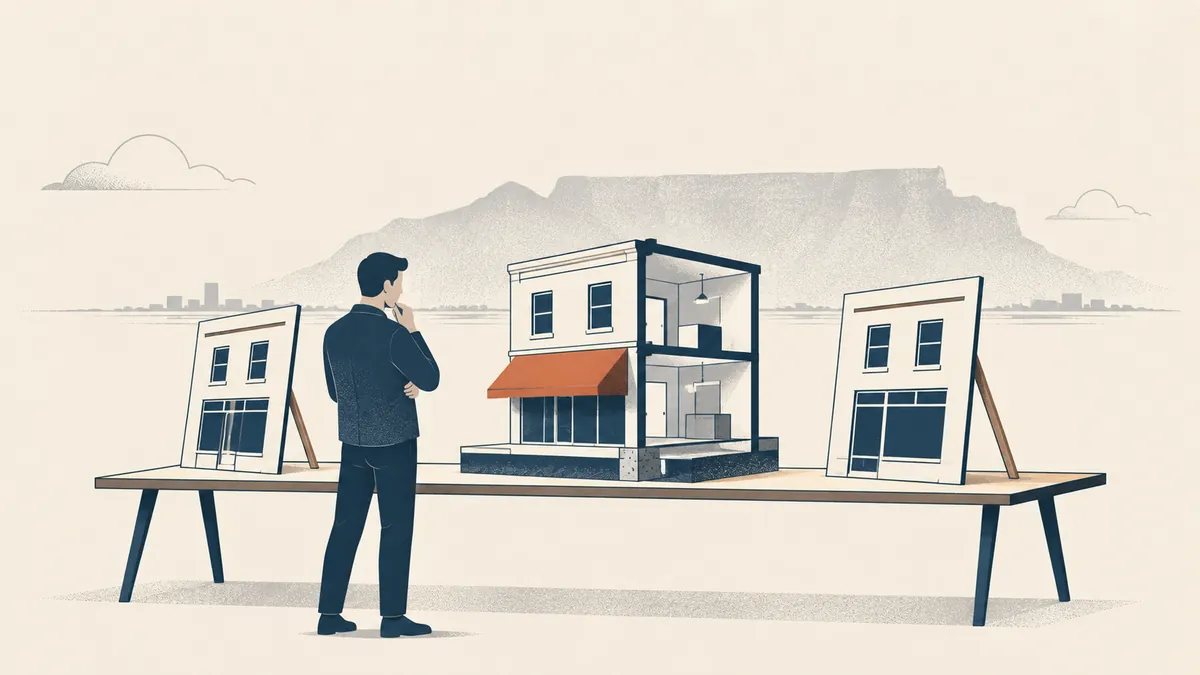
- Can I click on three live sites you built? Live, real, current client work. Mockups prove design taste; live sites prove delivery.
Anyone can show you a beautiful screenshot. A live site shows you load speed on your own phone, how the forms behave, and whether the work survives contact with a real business. If a Cape Town web design agency cannot point you at live work, you are their experiment.
Red flags that predict a bad build
Most website disasters announce themselves before the deposit is paid. Vague scopes, agency-owned domains, no measurement plan, unconditional timelines and pressure to sign quickly are the five warning signs that reliably predict a build you will regret.
| Red flag | What it usually means |
|---|---|
| No written scope, just a price | The scope will be whatever is cheapest to deliver once you have paid |
| The agency registers the domain in its own name | Leaving them later means negotiating for your own business identity |
| No mention of analytics or tracking | Nobody will ever be able to say whether the site works |
| A promised timeline with no conditions attached | Either the timeline is fiction or the scope is a template |
| Pressure to sign today for a discount | The offer cannot survive you thinking about it overnight |
| Only mockups in the portfolio | Delivery is unproven; you are buying pictures of websites |
Green flags: what a good process looks like
A good web design company shows you its process before you ask, tests on real phones, wires analytics in before launch, and hands over everything it built. The process should be visible enough that you always know which stage your build is in and what is needed from you next.
This is the shape of a build run properly, and it is the process KM Digital Solutions runs on every standard site:
On our standard scope this process completes in five business days, with honest conditions attached: the clock starts once the deposit is paid, the brief is approved and your content, brand assets and access are in, and it pauses if anything waits on you. E-commerce is excluded and quoted with its own timeline. The full detail is on our website design and development page.
How much should you budget?
Budget R10,000 to R25,000 once-off for a professionally custom-built business website in South Africa, plus roughly R700 to R1,000 a month for hosting and care. Quotes far below that range usually describe template work with limited scope; quotes far above it should come with scope you can point to.
On the KM Digital Solutions rate card, a one-page site is R10,000, a multi-page site is R15,000 and e-commerce is R25,000, with extra pages at R2,000, a care plan at R500 per month and hosting billed at cost, typically R200 to R500 per month. We do not charge VAT. Founded in 2025 and based in Durbanville, Western Cape, we publish every one of these figures on our website precisely so that comparisons like the one you are doing right now are possible. Whatever agency you choose, hold their numbers to the same standard of clarity: a price you can see, attached to a scope you can read.
Look at live work, not mockups
The strongest evidence any web design company can offer is live client work you can visit right now on your own phone. Load speed, mobile behaviour and working enquiry forms cannot be faked in a screenshot, which makes live sites the fastest honest test of an agency’s delivery.
Our own proof is four live builds you can click today: Celsa Property Group, Beach House Wilderness, Voëlklip Villa and Kwelanga Builders and Projects, all custom WordPress builds for South African businesses, all linked from the work section of our homepage. Open any of them on your phone. Time how long the page takes to appear, tap the menu, try the enquiry flow. Then do exactly the same on the live work of every other Cape Town agency on your shortlist. Ten minutes of this beats an hour of sales conversation.
Put us through the same test
Send one message about your project and judge us on the reply: same business day for enquiries sent during business hours, in plain English, with a straight answer about whether we are the right fit.
Frequently asked questions
How do I check if a web design company is legitimate?
Ask for live client sites and visit them on your own phone, confirm the company will register your domain in your name, and get the scope in writing before paying a deposit. A legitimate web design company in Cape Town will volunteer all three without hesitation. Be cautious of portfolios made entirely of mockups and of prices with no written scope attached.
Should I choose a local Cape Town agency or work remotely?
Choose on process and proof rather than postcode. A Cape Town or Durbanville agency offers easy meetings and local market understanding, but a disciplined process matters far more than distance. We build for businesses across the Western Cape and deliver remotely across South Africa; what stays constant is the written scope, the visible stages and the handover at the end.
How long should a website build take?
A standard marketing site with a practised process takes days to a few weeks; ours completes in five business days once the deposit, approved brief and content are in. Be more suspicious of open-ended timelines than of fast ones with clear conditions. The most common cause of slow builds is not the agency but content: copy and photographs that wait on the client pause every timeline.
What should a website quote include?
A complete quote lists the pages, states who writes the content, includes mobile testing and analytics setup, names the launch checks, and states the ongoing hosting and maintenance costs separately. It also says who owns the domain and the site, which should always be you. If any of those items is missing, ask; if the answer is vague, that is your signal.
Is it worth paying more for custom design over a template?
If the website’s job is to win you business, usually yes. Custom design starts from your industry, your customers and what they need to see before they enquire, while a template makes those decisions generically for everyone. Templates suit tight budgets and simple needs; custom builds earn their price when credibility and enquiries are the point of the site.
KM Digital Solutions is a founder-led website design and digital studio in Durbanville, Western Cape, with two directors hands-on from first call to final handover. Start with one message.